Fever
Fever is a global marketplace for live experiences, operating across 100+ cities worldwide.
As the Seniot Product Designer for two core squads, Product Detail Page and Checkout, my goal was to increase conversion by improving clarity, trust, and scalability across the purchase experience. Each initiative addressed a structural friction layer in the checkout ecosystem, grounded in experimentation, behavioral research, and funnel analysis.
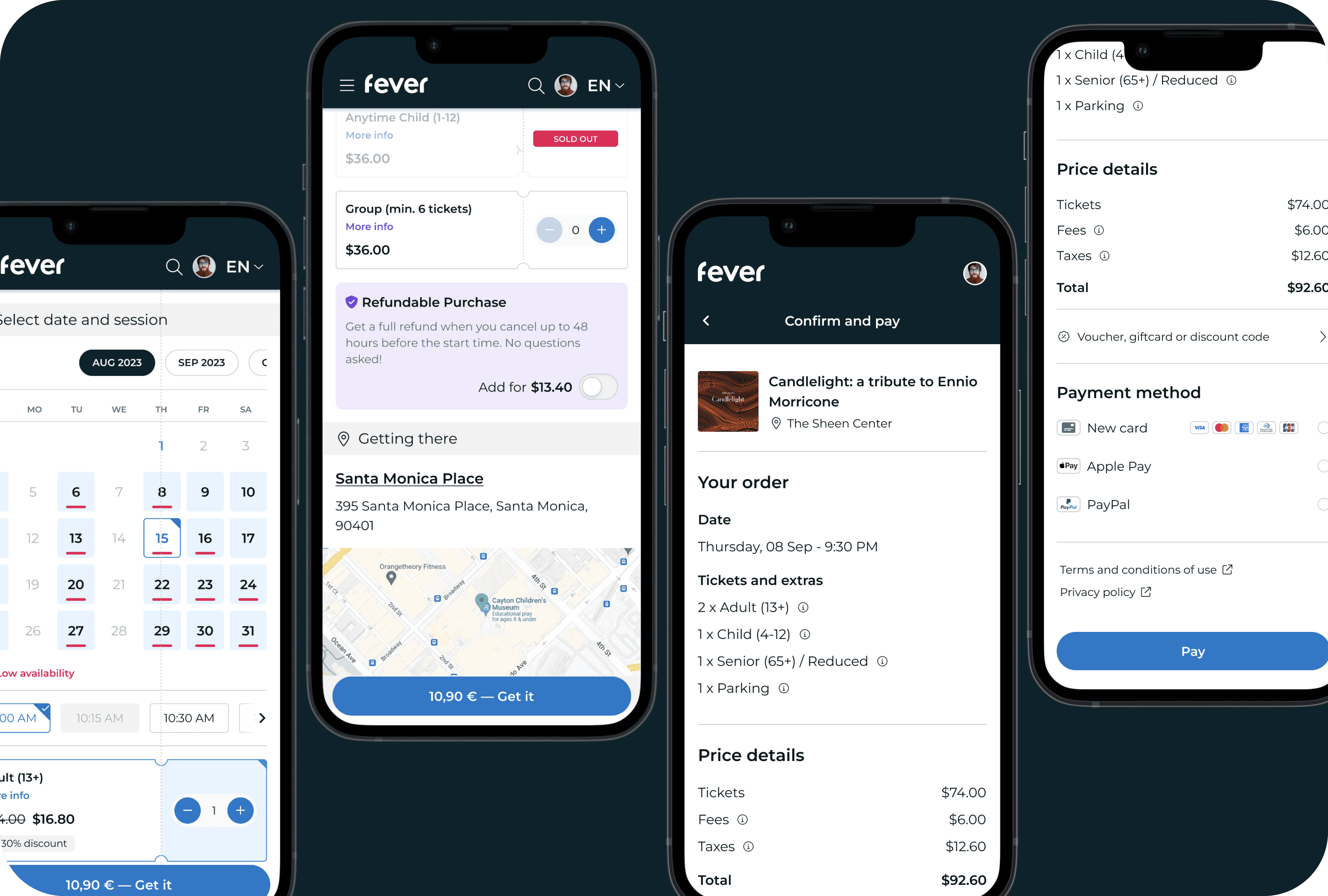
Designing for trust in complex purchase journeys
At Fever, I focused on one core objective: make increasingly complex purchase flows feel simple, transparent, and reliable across markets.
As Fever scaled globally, the purchase experience evolved from single-ticket transactions to multi-variable orders involving multiple ticket types, add-ons and upgrades, date and time sensitivity, local taxes and pricing nuances, and different payment methods per country.
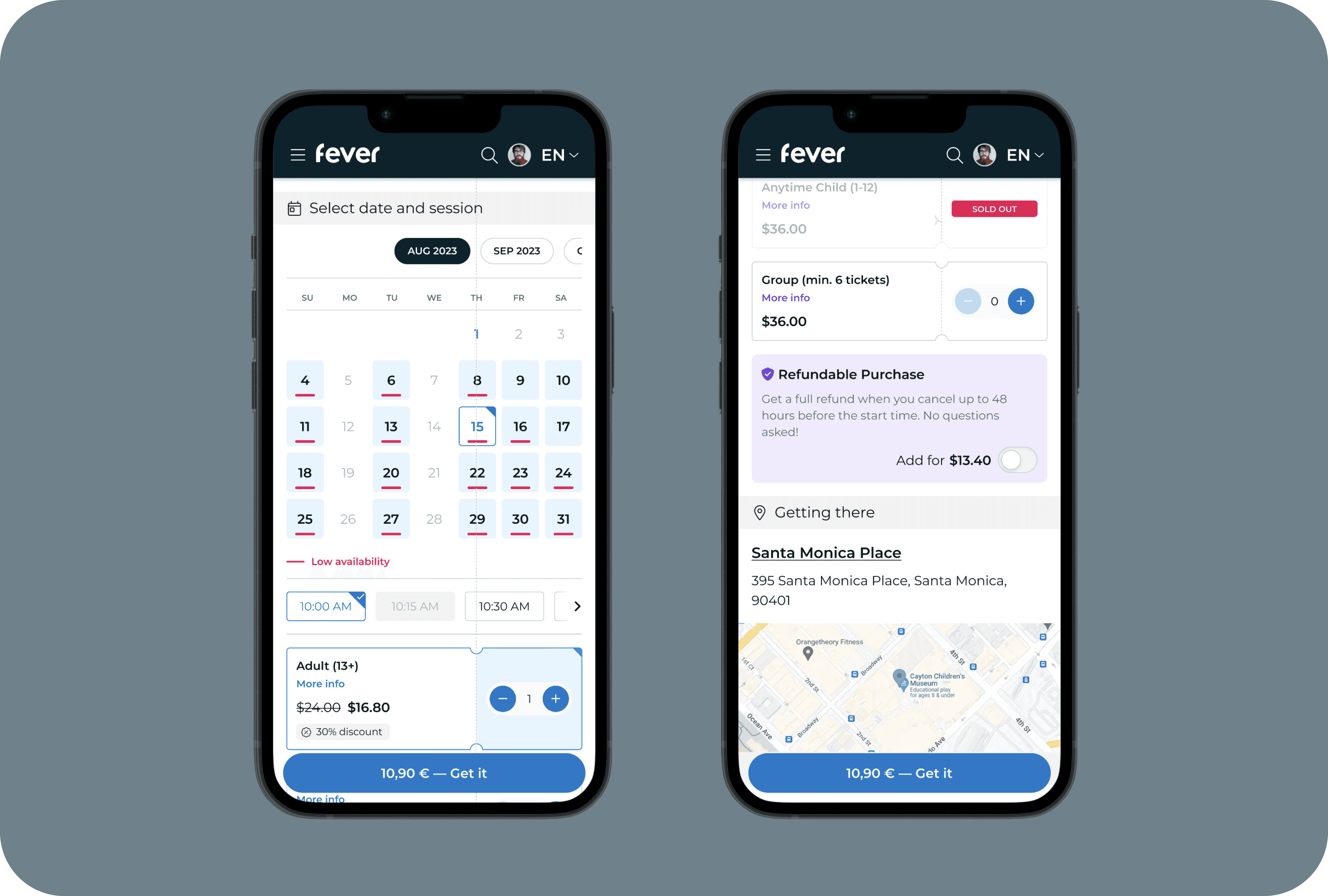
Conversion was not limited by intent, it was limited by clarity and trust. Users wanted to buy but the experience didn't consistently support the mental work they were doing before committing to pay. Users misunderstood what they were purchasing, date and time selection errors led to refunds, pricing hierarchy was unclear, payment options competed visually, and the checkout structure didn't scale as new markets were added.
Strengthening the entire purchase system from discovery to payment confirmation.
Clarity before commitment
The problem
Users needed to understand exactly what they were buying before they felt confident paying. The work focused on improving how ticket options, availability, and pricing were presented on the product detail page, reducing ambiguity and selection errors.
Trust through transparency
The problem
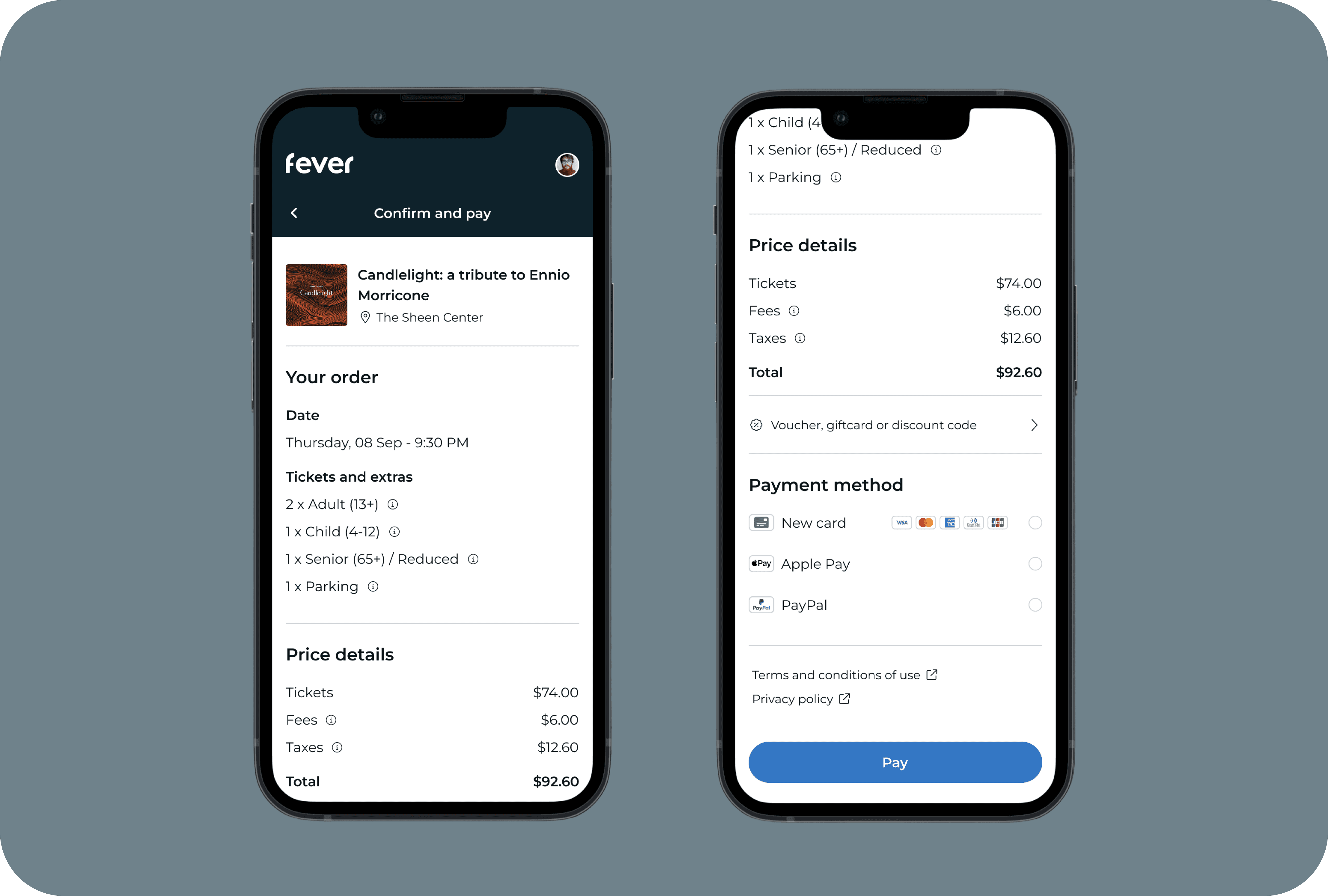
As orders became more complex (multiple tickets, add-ons, date-sensitive pricing), the checkout needed to make every cost visible and every step predictable. The work focused on restructuring how pricing, fees, and totals were communicated so users never felt surprised at the moment of payment.
Scalability across markets
The problem
What worked in Spain didn't necessarily work in Mexico or the US. Each market introduced different payment methods, tax rules, legal constraints, and user expectations. The work focused on building a checkout architecture flexible enough to adapt to local requirements without fragmenting the core experience.
Impact
Across platforms, the combined efforts resulted in a 20.75% increase in conversion to purchase on web, 15.65% on iOS, and 12.81% on Android. The uplift was not driven by a single feature but by reducing friction across the full journey.
Deep dive
Want to go deeper into the problem framing, hypotheses, experimentation, and results? Happy to walk through any of these in a call.
Get to know me
I build digital products. Not just the interface. The thinking behind why it works, who it is for, and whether it is actually solving the right problem.