Baxter Planning
Baxter Planning (previously Entercoms, acquired in 2021) builds B2B SaaS products for service parts planning and supply chain optimization, serving industries like high-tech, medical devices, aerospace, and industrial equipment.
As Product Designer, I worked across both client-facing custom solutions and in-house subscription products, owning the full design cycle from stakeholder discovery and requirement mapping through to implementation and iteration.
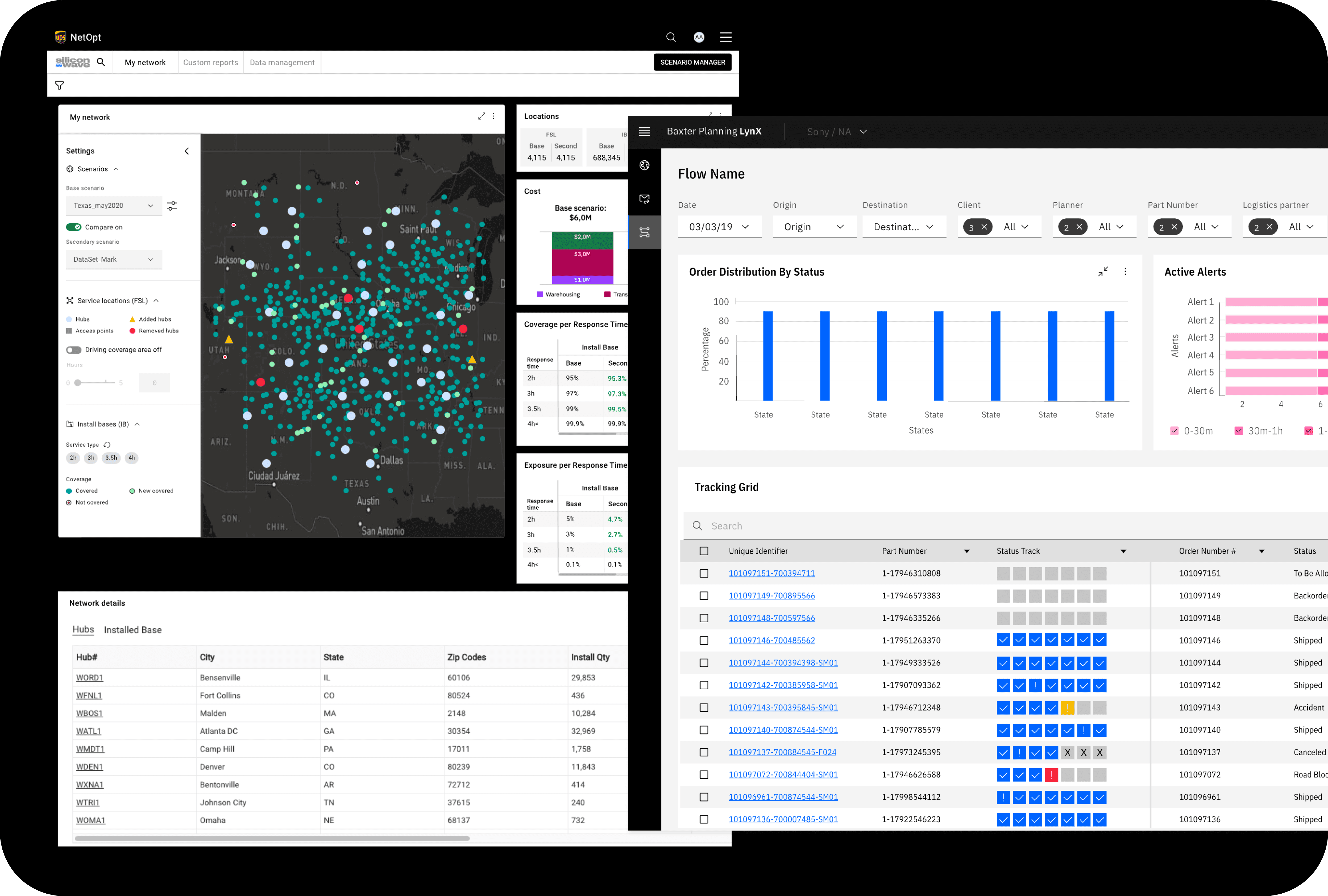
Designing for operational clarity in complex systems
At Baxter Planning and Entercoms, users were planners, analysts, and operations managers working with large datasets, forecasting models, service-level targets, inventory constraints, and financial trade-offs, often spread across disconnected tools and isolated systems. They didn't need more features, they needed the system to match how they actually think and work.
The system worked, but it demanded too much interpretation. Workflows were technically correct but cognitively dense, business logic was not always visible in the interface, exception handling required navigating multiple modules, and custom enterprise requirements increased system complexity.
The objective was to make operational logic explicit, workflows coherent, and decisions traceable. On top of that, the products needed a layer of personalization so they could adapt to each client's business case and constraints, and a layer of business intelligence so users could invest their time in making smarter decisions rather than gathering data.
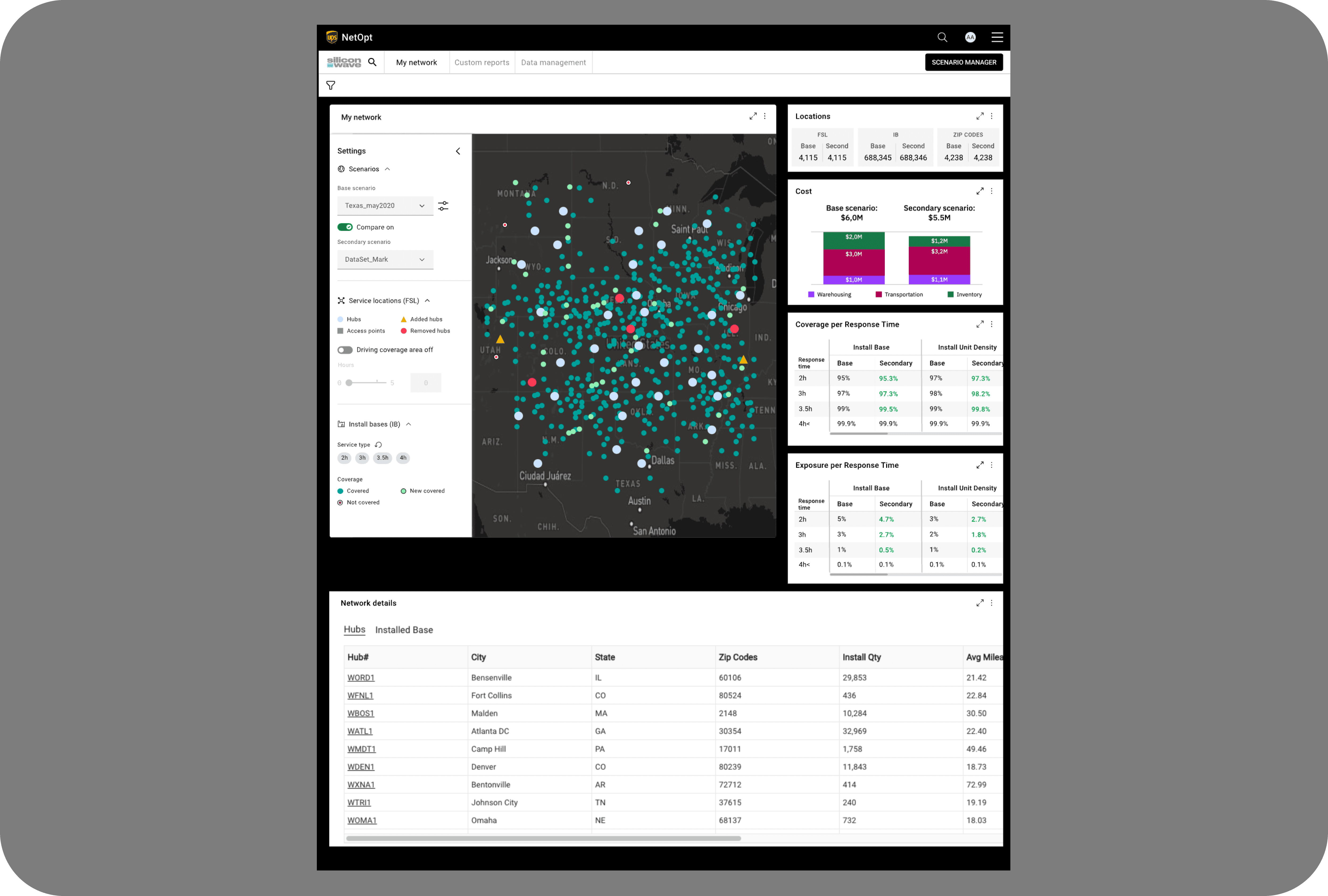
Addressing different layers of the service supply chain
Across both, the design also incorporated configurable workflows that adapted to each client's specific constraints, and a layer of intelligence so users could spend time on decisions rather than data gathering. I also contributed to the design system to ensure consistency across teams. 8% increase in customer satisfaction. Improved adoption in subscription-based products
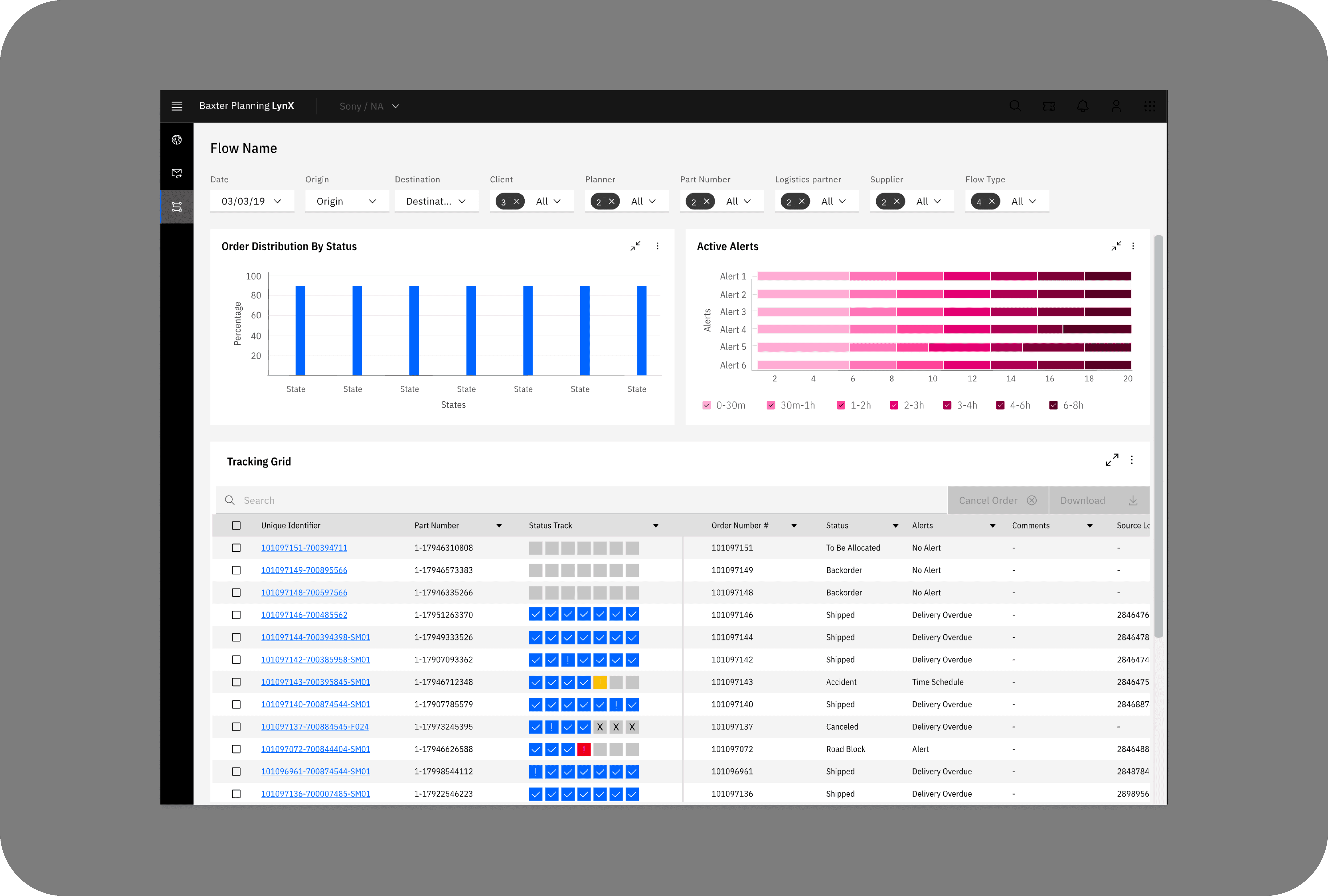
Order execution - visibility before disruption
The problem
Teams were making decisions without seeing the full picture. Delays surfaced too late, costs escalated because of reactive workarounds, and customer commitments were missed because no one could anticipate what was coming.
What we shipped
We focused on giving users real-time visibility across their entire network, alerts that surfaced problems before they escalated, and automated workflows that reduced manual effort and errors.
Impact
61% productivity gains. 43% decrease in expedited freight costs.
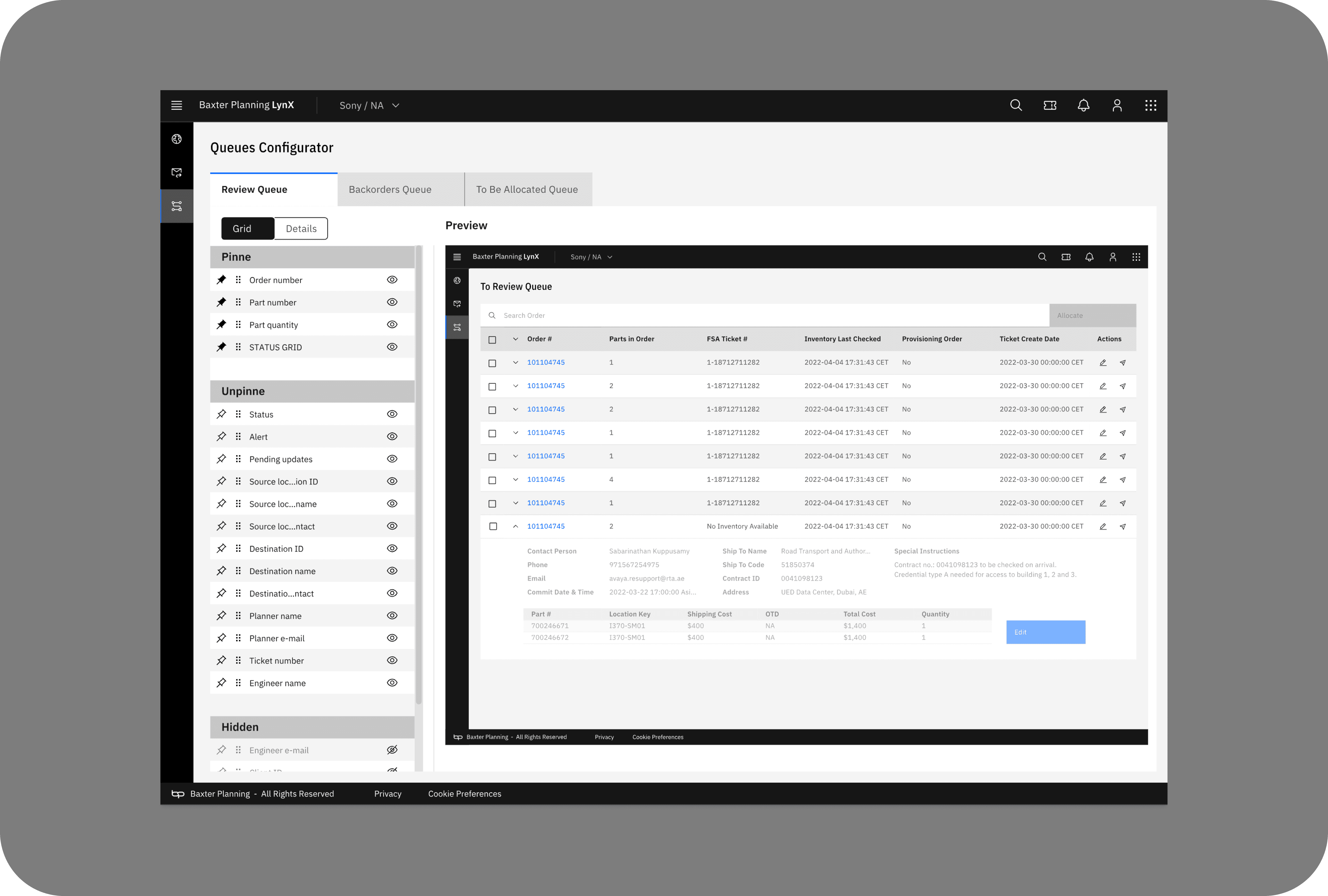
Escalation management - from reactive to structured
The problem
When problems surfaced, resolving them was slow. Information lived in different places, identifying the root cause required jumping between modules, and communication during resolution was fragmented.
What we shipped
We focused on centralizing the resolution process, surfacing likely causes and solutions proactively, and simplifying the path from problem to fix.
Impact
70% reduction in time to resolve. 25% reduction in escalations. 20% reduction in backlog.
Deep dive
Want to go deeper into the problem framing, hypotheses, experimentation, and results? Happy to walk through any of these in a call.
Get to know me
I build digital products. Not just the interface. The thinking behind why it works, who it is for, and whether it is actually solving the right problem.